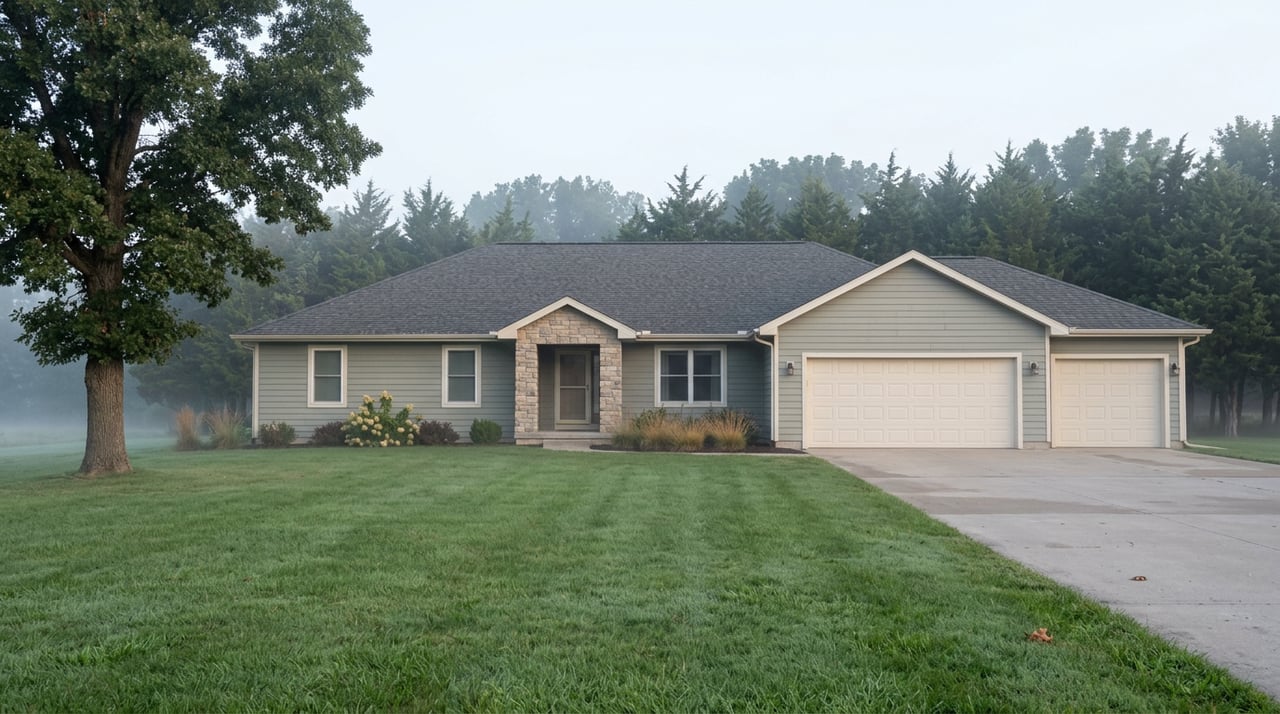
Everyone shopping acreage near Adel assumes the home inspection is the thing that could blow up their timeline. A cracked foundation, an aging furnace, water in the basement. Those are real risks, but they are not the ones that actually stall Dallas County acreage closings right now.
The real bottleneck is a state law almost nobody outside rural Iowa has ever dealt with: the Time of Transfer septic inspection. If the property you are buying or selling sits on a private septic system instead of city sewer, which describes most of the acreage inventory outside Adel's city limits, this inspection is not optional and it is not fast. And in a market that has quietly sped up over the past year, treating it as an afterthought is the single most common way buyers watch their closing date slip.
The assumption buyers bring from the suburbs
Most people looking at acreage near Adel are coming from somewhere with city water and sewer, places like Waukee or Clive where the home inspection covers essentially everything that could go wrong. They assume a septic system is just a slightly rural version of the same plumbing, checked the same way, on the same schedule.
It isn't. Iowa's Time of Transfer law, established under Iowa Code 455B.172, requires that every home or building served by a private sewage disposal system have that system inspected by a DNR-certified inspector before the deed transfers. This applies to every ownership change that isn't specifically exempted, including seller-financed contracts. It is a state requirement layered on top of, not instead of, whatever the buyer's lender or agent asks for in a standard home inspection.
| What buyers assume | What's actually true |
|---|---|
| Septic gets checked as part of the general home inspection | It requires a separate, DNR-certified inspector and a separate report |
| The seller can just say the system "works fine" | The tank must be pumped or opened, and the report must document tank and field condition |
| One inspection covers the sale indefinitely | A Time of Transfer inspection is only valid for two years |
| County involvement is a formality | Dallas County's Environmental Health Department reviews the report and can require repairs before closing |
What the inspection actually involves
This is not a five-minute walk-through. Iowa's administrative rules for Time of Transfer inspections (567 IAC Chapter 69) spell out exactly what a certified inspector has to do:
- The septic tank must be opened and pumped, or the owner must provide documentation that it was professionally pumped within the prior three years.
- The distribution box gets examined to confirm wastewater is flowing and splitting correctly.
- The absorption or leach field is probed to check its condition.
- Any system that legally discharges effluent must have that effluent tested to meet state water quality standards.
Once the inspection is done, the inspector submits the report to the county environmental health office, which reviews it before the report is filed with the state. If the system fails, the seller or buyer has to arrange repairs, or the buyer can sign a binding agreement with the county to install a compliant system after closing. None of that happens overnight.
The county layer nobody mentions
Dallas County adds its own wrinkle on top of the state requirement. The county's Environmental Health Department is the administrative authority for permitting private septic systems here, and county ordinance requires a soil analysis and design from an approved entity before anyone can even apply for an installation permit. If a system needs replacing rather than repairing, that soil work has to happen before the county will issue a permit, which means the clock on a septic fix can run longer in Dallas County than in a place with looser local rules.
This is the detail that catches acreage buyers off guard. They budget time for a home inspection contingency. They do not budget time for a soil analysis, an approved contractor, and a county permit review, because nothing in their prior experience buying a house on city sewer ever required it.
Why this matters more right now than it did a year ago
Here is the part that changes the math for anyone shopping this market today. Over the three months ending May 2026, Dallas County homes sold in a median of 60 days, down from 91 days over the same window a year earlier, with 285 homes closing in May 2026 compared to 248 in May 2025. The county's median sale price also came in at $369,000 for that window, down 3.6 percent year over year.
Put those two facts together and you get a market that is moving faster while getting slightly more affordable, which sounds like good news for buyers until you consider what a compressed timeline does to a transaction that includes a state-mandated septic inspection with its own review and repair cycle. A 91-day close gave everyone room to schedule the inspector, wait for the county's review, and handle a repair if one came up. A 60-day close does not leave the same cushion. Buyers and sellers who wait until after mutual acceptance to even think about scheduling the Time of Transfer inspection are the ones most likely to see their closing date slide, precisely because the rest of the transaction is now moving quicker than the septic review can keep pace with.
What this actually means for your closing date
None of this is a reason to avoid acreage near Adel. It is a reason to sequence the transaction differently than you would for a subdivision listing.
Sellers benefit from getting the Time of Transfer inspection scheduled before the property even goes under contract, so the report is already in hand when an offer comes in. Buyers benefit from asking, at the time an offer is written, whether an inspection already exists and if so how old it is, since a report older than two years does not satisfy the requirement no matter how well the system has performed since. Anyone on either side of an acreage deal should also ask the county for a copy of the existing septic permit and diagram if one is on file, since Dallas County will provide this on request and it can save real time later if repairs come up.
The system also allows for weather-delayed inspections through a binding agreement with the county board of health, which matters if you are trying to close in the middle of an Iowa winter and the ground is frozen. That option exists, but it still requires paperwork and county sign-off before closing, not after.
A quick FAQ
Does every home near Adel need this inspection, or just acreages? Only properties served by a private septic system need a Time of Transfer inspection. Homes on city sewer within Adel's limits are not subject to this requirement. It is specifically an issue for acreage and rural properties.
How long is the inspection good for? Two years from the date it was completed. An inspection from three years ago does not count, even if nothing about the system has changed.
Who actually performs the inspection? Only inspectors certified by the Iowa DNR can conduct a Time of Transfer inspection. The county environmental health office receives and reviews the completed report before it goes to the state.
What happens if the system fails inspection? The seller or buyer becomes responsible for repairs to bring the system into compliance, or the buyer can execute a binding agreement with the county to install a compliant system within a set timeframe after closing.
Acreage living near Adel comes with real advantages, space, privacy, and a slower pace than the subdivisions closer to the metro. The septic timeline just runs on its own schedule, and the buyers and sellers who plan around it early are the ones who actually close on the date they wrote into the contract. If you are weighing an acreage purchase or sale in this market, BVZ Homes can walk you through exactly where your property or target listing stands before you're mid-contract wondering why the closing date moved. Contact us to talk through the specifics of your situation.